If you’re doing great work and still not getting promoted, maybe you’ve been following the wrong advice about what really matters.
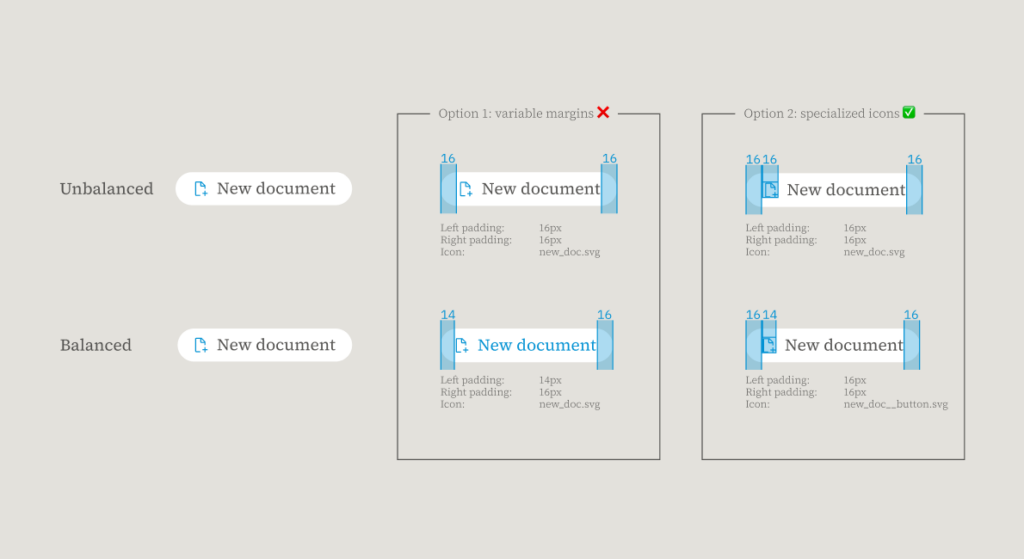
A certain kind of advice keeps circulating that says pixel-level attention to detail is what separates junior designers from senior ones. The example is usually something like this image: custom button padding next to an icon. Spot it, fix it, and that’s the craft that gets you to the next level.
It’s well-intentioned. But there are two reasons I think it’s pointing junior designers at the wrong target.
Reason 1: it misidentifies what senior actually means.
Senior designers don’t get promoted because they noticed something. They get promoted because of what they do with what they notice. That’s judgment — knowing which problems are worth solving right now, how to solve them without making more problems, which are symptoms of something deeper, and which ones to let go.
The other thing that gets you promoted is ownership. Not of a file or a component. Ownership of user outcomes. Did the thing you designed actually work? Did you follow up? Did you change course when it didn’t? Senior designers are accountable beyond the handoff.
And honestly, communication might be the biggest one. The ability to walk a stakeholder through a decision, push back without burning the relationship, and make the room feel like the problem is solvable. Craft gets you in the door. Judgment, ownership, and communication get you to the next level.
Reason 2: it’s also just technically wrong.
The padding isn’t the thing to fix. The icon is. There’s no rule that says every icon has to be 16×16px. Build a “–button” variant with the right proportions and the padding takes care of itself. Consistent components, no sprawling list of button variations, and your front-end developers don’t stage a quiet revolt.
Custom padding per icon isn’t a senior move. It’s a maintenance problem waiting to happen.
So what should junior designers actually be focused on? Less on catching what looks off. More on understanding why it’s off, whether it’s worth fixing, and what the fix costs the team. That’s the thinking I look for when I’m deciding who’s ready for the next level.