Before you reach for a design pattern, ask yourself: “do I actually understand why it exists?” Most of the time, using a familiar pattern is the right call. But sometimes it’s just comfortable. And comfortable can be slowing you down.
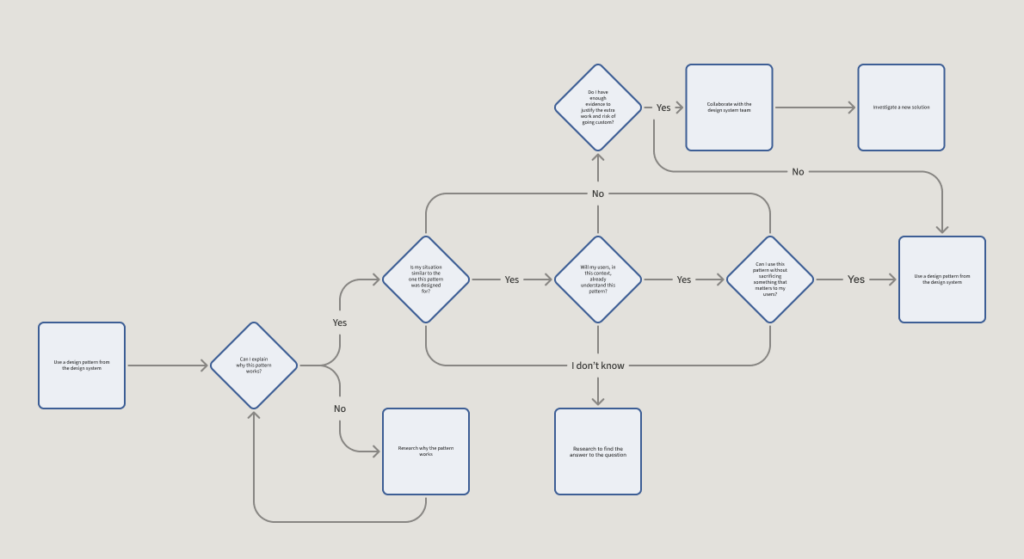
Here’s the mental test I use: Can I explain why this pattern works, not just that it works? If the answer is no, you’re not using the pattern. You’re hiding behind it. But the fix isn’t to go find something new. It’s to go figure out why the pattern works. That way you can make an educated choice on how to proceed.
Design patterns exist because someone solved a real problem in a specific context. Carousels made sense when screen space was expensive. Hamburger menus made sense when mobile was new and navigation was secondary. Those contexts aren’t always true anymore.
So before you commit to a pattern, ask 3 things:
1. Is your situation similar to the one this pattern was designed for?
2. Will your users, in this context, already understand this pattern?
3. Can you use this pattern without sacrificing something that matters to your users?
If you answered yes to all three questions, use it. Confidently. Patterns reduce cognitive load, speed up development, and give users a familiar footing. That’s genuinely valuable.
If the answer to any of those is “I don’t know,” stop. Do the research first. Novel solutions earn their place when you’ve done that work and the pattern still doesn’t fit. Novel doesn’t mean weird. It means purpose-built. It means you looked at the problem and the pattern and decided the pattern wasn’t actually solving the right thing. The catch: novel solutions carry a higher burden of proof. You need to validate them more carefully. A pattern comes with years, sometimes decades of implicit user testing. Yours doesn’t.
If you’re seriously considering going custom, talk to your design system team first. They may know why the pattern exists the way it does. Or they may help you identify whether a gap in the system is the real problem. A custom solution that nobody else knows about becomes technical debt fast.
So the question isn’t “pattern or novel?” It’s really: “do I have enough evidence to justify the extra work and risk of going custom?”
Usually, you don’t. Use the pattern.
Occasionally, you do. Build the thing.
The designers who get this wrong aren’t the ones who use too many patterns. They’re the ones who never stop to question whether the pattern fit in the first place.